
A new program funded by the federal government – the Driver Alcohol Detection System for Safety Program – seeks to install passive blood-alcohol concentration detectors in all vehicles. Supporters of the program believe the new technology can follow in the footsteps of past proposed safety measures like seatbelts, airbags, or blind-spot detection. There is even a push to make such devices mandatory for all new cars and trucks by the 2024.
How the New Technology Would Function
Unlike an ignition interlock device, the proposed alcohol detection system would work passively, meaning, a driver would not need to blow into any type of tube in order for it to work. Instead, two combined technologies would work together: a breath-based system and a touch-based system.
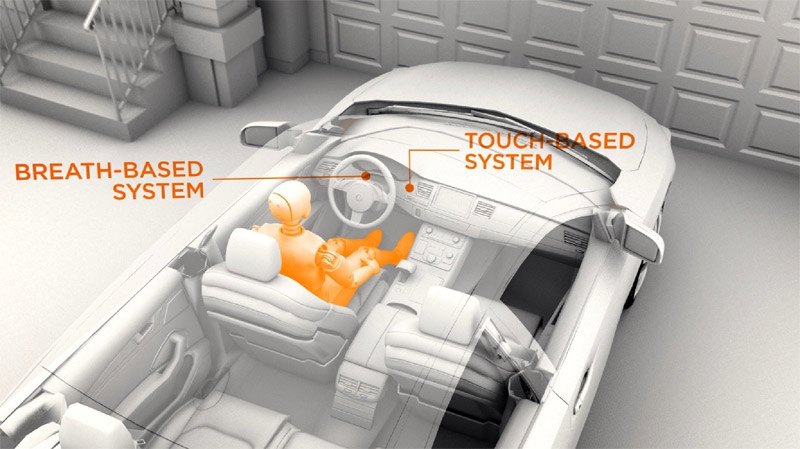 The breath-based system would pull the driver’s exhaled breath into a vent sensor on or near the steering wheel or driver’s side door. The driver would be able to breath normally and would not need to take any additional steps. The system would also be able to target only the driver’s breath, ensuring that the breath of other passengers are not captured. If an illegal blood-alcohol content (above the legal limit of .08%) is detected, the car would be rendered inoperable.
The touch-based system would be placed on the ignition button or on the steering column and would be able to measure a person’s blood alcohol content through the skin. Again, if an illegal blood alcohol concentration is detected, the vehicle would be rendered inoperable.
Congressional Attempts to Make the Technology into Law
United States Senators Tom Udall, D-N.M., and Rick Scott, R-Fla., introduced legislation last week in Congress to make this new technology a requirement for all new cars and trucks by 2024. The bill is named the “Reduce Impaired Driving for Everyone Act of 2019,” called the RIDE Act. Part of the act will direct funding to researching the new sensors, in order to make sure the technology can work quickly and reliably with no effort on the part of the driver. The proposed law would also reserve $25 million for testing in government-owned vehicles.
Since 2008, the program has received $50 Million in funding in collaboration with the National Highway Traffic Safety Administration and the Automotive Coalition for Traffic Safety – a group of automakers.
The hope is that, by making the technology available, people will push to have it in their vehicles, similar to current technologies like back-up cameras, blind-spot monitoring, or even self-driving vehicles.
How DWI Arrests and Convictions Could Be Affected by the Technology
If the technology is able to render a vehicle inoperable, it could reduce the number of DUIs and DWIs. However, until the technology receives better testing, there will be no way to determine its accuracy.
If a driver uses a technology to test his or her own BAC, and the technology is wrong, it will not be a defense against a DWI or DUI charge. For instance, if a driver has a BAC of .08%, but the car allows him or her to drive anyway, the driver could still be pulled over, arrested, and convicted of drunk driving.
NJ DUI/DWI Defense Attorney Edward M. Janzekovich Understands How to Help
Because technology is constantly changing and improving, DUI and DWI law is constantly changing, too. If you or someone you know is arrested or charged with drunk driving, it important to consult an attorney with both a history of experience and the most up-to-date information. A good lawyer can make all the difference. To speak with an experienced New Jersey DWI lawyer about your situation, call us at 732-257-1137 or contact us online today. We serve clients throughout the state of New Jersey.
 Here on the Edward M. Janzekovich law blog, we regularly discuss what can happen to you if you are convicted of drunk driving, drugged driving, or driving while high. Most people are aware that consequences include jail time, loss of driving privileges, and excessive fines. However, this does not even begin to approximate the real cost of a DUI. One thing many people forget is that a conviction will also result in increased car insurance premiums.
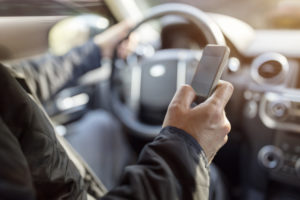 You swerve around a curve just a little and someone anonymously reports to the police that you are driving recklessly or dangerously. All of a sudden, you are pulled over by a police officer who as far as you know, did not see you violate any traffic laws. You are subsequently given field sobriety tests, or your car is searched. Before you know it, you are arrested and charged with driving under the influence of drugs or alcohol or possession of CDS. Is this legal in New Jersey? Unfortunately, yes.


 It is common knowledge that it is illegal to drive while intoxicated in New Jersey. However, in order to be convicted, a state prosecutor must prove that a driver actually operated the vehicle while he or she was intoxicated, not before he or she got drunk. Therefore, a defendant should not be charged for being intoxicated in a parked car if there is no proof that he or she drove the vehicle after becoming drunk. Nonetheless, defendants are charged on a regular basis with DUI or DWI, despite never driving drunk, because the police officer discovered the driver drinking or sleeping in a parked vehicle.